Beyond artificial intelligence: why the real change is not technological
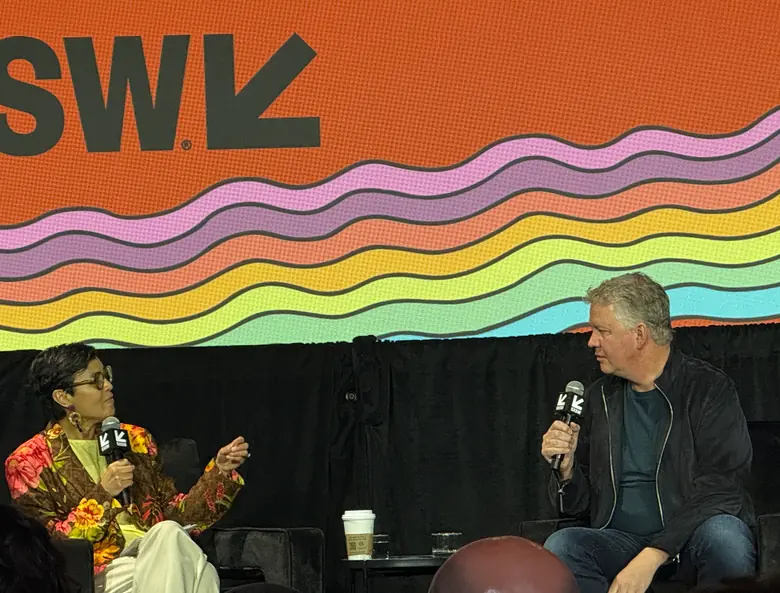
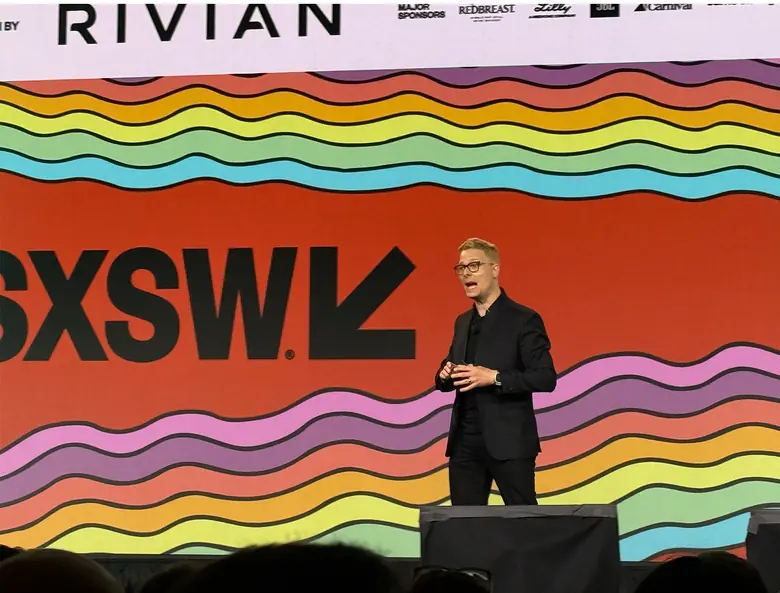
At SXSW 2026 one thing became clear: the change we are living through is not a new technological wave.
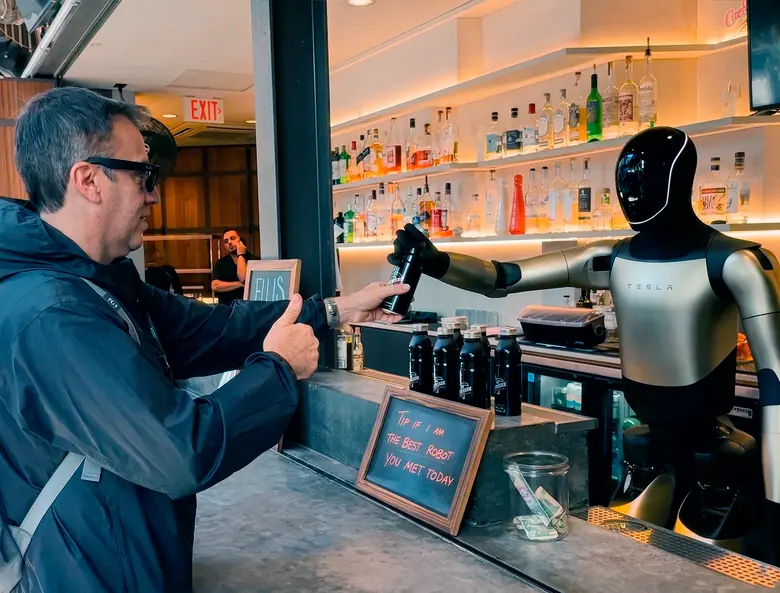
It is a system change.
For years, companies prepared to bring in tools. Today, that is no longer enough. Artificial intelligence stopped being a layer added on top of what already exists and became a force that requires redesigning everything: how work gets done, how decisions are made, how value is created and, above all, what role the human being occupies in that system.
The question is no longer “how do we use AI.”
The question is far more uncomfortable: how do we design a company that makes sense in a world shot through with AI?
The real differentiator: judgment
From Argency, what we take away from SXSW 2026 is not a list of tools.
It is a conviction.
In a context where everything accelerates, the differentiator is not adopting technology faster.
It lies in developing the ability to interpret what is happening.
Read the convergences.
Understand the implications.
Make decisions with purpose.
Because if everyone has access to the same tools,
the difference is not made by technology.
It is made by judgment.
Human First, now more than ever
At Argency we believe this moment is not about choosing between human or technology.
It is about designing systems where technology strengthens what is human, rather than replacing it.
Where efficiency does not eliminate identity.
Where scale does not dilute meaning.
Where automation does not switch off creativity.
SXSW 2026 left one idea resonating loudly:
The future is not defined by what technology can do.
It is defined by what we decide to do with it.
And in that decision, the human is not a limit.
It is the starting point.
The most common mistake: thinking of AI as technology
One of the most consistent lessons from SXSW was that the main problem with AI is not technical.
It has nothing to do with models, or tools, or more sophisticated prompts.
It has to do with something far more structural:
the way organizations are designed.
The cases that really work are not the ones that implement AI best, but the ones that best understand:
- the problem they are solving
- the context in which they operate
- and the people who are part of the system
When you try to “plug” AI into old processes, it fails.
When the system is redesigned around it, it starts to generate value.
From doing tasks to designing systems
Another profound —and less obvious— change is the displacement of human value.
For decades, work was associated with execution: producing, solving, delivering.
Today, that is starting to be automated.
What emerges as a differentiator is not the ability to do, but the ability to think about how it is done.
Designing systems.
Defining criteria.
Translating vision into rules.
Building logic.
In other words: we went from being operators to being architects.
And that is not a change of tools.
It is a change of mindset.
AI's blind spot: it understands everything except the human
Artificial intelligence has advanced extraordinarily in terms of efficiency.
It can answer, classify, optimize, predict.
But there is something it still does not understand well:
the unstructured world of the human.
Emotion.
Context.
Intuition.
Ambiguity.
And that is no small detail. It is the heart of many relevant decisions.
That is why, as AI gains ground in execution, the most valuable capabilities start to be precisely the ones that cannot be easily automated:
- judgment
- sensitivity
- critical thinking
- real creativity
- the ability to connect ideas
The paradox is clear:
the further AI advances, the more important the human becomes.
Creativity at risk: the danger of becoming generic
One of the most uncomfortable themes running through SXSW was creativity.
Not because AI cannot create.
But because it can do it too easily.
When friction disappears —the doubt, the error, the process— part of the value of the result disappears too.
And there a concrete risk appears:
homogenization.
Brands that look like one another.
Ideas without edge.
Content that is correct, but soulless.
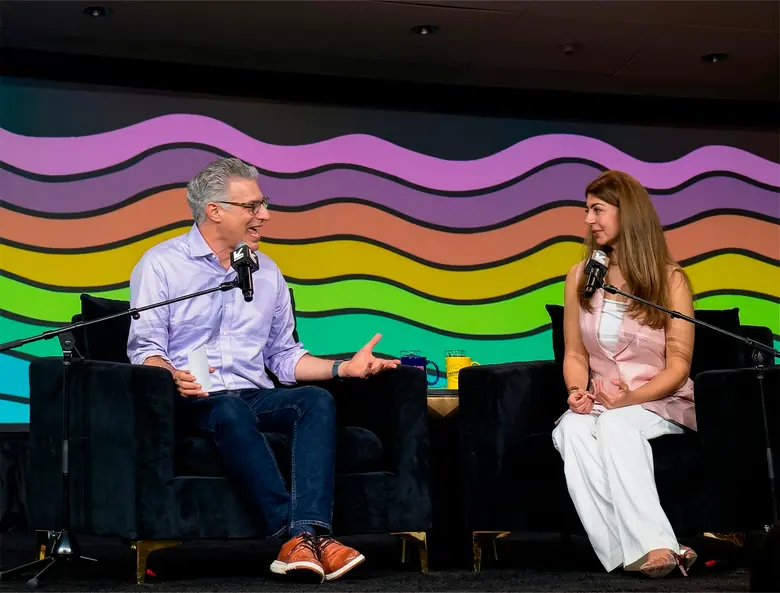
Along those lines, Argentines Martin Rabaglia and Franco Luca raised something very powerful: the real danger is not that AI replaces us, but that it makes us generic.
When we all use the same tools, in the same way, with the same prompts, the result is inevitable:
an increasingly uniform world.
Creativity, then, stops being a matter of execution.
It becomes a matter of judgment, culture and risk.
From trends to convergences: a new way of reading the future
Another key change is how we understand what is coming.
For years, companies worked with trends: isolated signals that indicated where the market might go.
Today that falls short.
What is starting to emerge is a system of convergences:
technology, biology, economy and society advancing at the same time and reinforcing one another.
This has a direct implication:
the future can no longer be read vertically (one industry), but horizontally (crossovers between industries).
And that demands another kind of outlook.
More systemic.
More strategic.
Less linear.
Work, the internet and the collapse of familiar models
AI is not only transforming how we work. It is calling entire models into question.
On one hand, the idea of “unlimited labor” is starting to break a historic relationship: that of economic growth tied to human work.
On the other, the internet —as we know it— is also entering a crisis.
If machines start searching, answering and making decisions for us, then:
- traffic changes
- content loses value if it is repetitive
- and intermediation is redefined
In that scenario, what gains value is not what is everywhere.
It is what cannot be easily replicated.