Instagram 2026: fewer likes, more strategy
Instagram is still alive, but the way to earn visibility has changed.
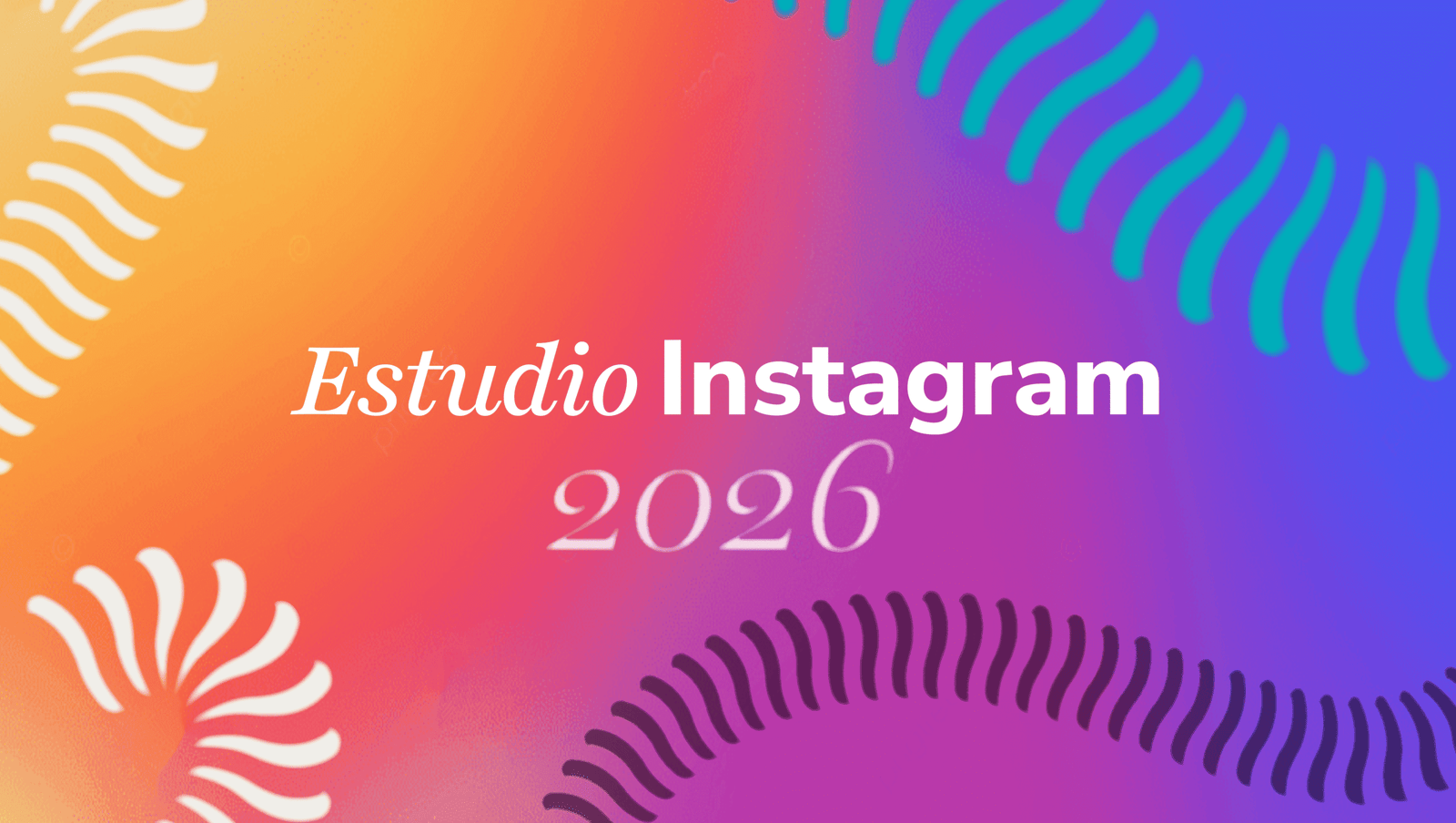
Metricool’s new Instagram Study 2026, based on the analysis of more than 24 million posts from 375,118 accounts, leads to a clear conclusion: Instagram is still alive, but the way to earn visibility has changed.
It is no longer enough to “be there.” Nor to post for the sake of posting. The difference lies in understanding which formats the platform pushes, which signals the algorithm values and how the audience actually responds.
1. Instagram rewards content that gets watched again
According to Metricool, views grew 27% in 2026. But this figure has to be read carefully: Instagram no longer measures everything the way it used to. “Views” replaced impressions and today they count every time a piece of content is shown, played or reopened.
This changes the working logic. A good post is no longer only the one that triggers a quick reaction, but the one that manages to be saved, shared or revisited.
For brands, this means something very concrete: you have to create content with a shelf life. Ideas that are useful, that inspire, teach or make people identify. Not just pretty pieces to fill the calendar.
2. Format is no longer an aesthetic decision
The study shows that Reels, carousels and single images behave very differently.
Reels are the strongest format for reaching new audiences. They grow in reach, interactions and shares. In fact, shares on Reels rose 67% compared to 2025.
Carousels, on the other hand, are especially powerful for going deeper. They achieve more views, more saves and more interaction than single images. Metricool notes that carousels get 9 times more saves than single-image posts.
The single image does not disappear, but it stops being the default format. It works when there is a clear reason: a powerful photo, a simple announcement, a corporate piece, a strong visual campaign. But if a brand always uses a single image out of convenience, it is probably losing reach and interaction.
3. Reels are no longer a trend: they are a language
Short video is no longer “something to try out.” It is a central part of how Instagram behaves.
Average play time per Reel went from 4 to 8.5 seconds, doubling in a year. Total watch time also grew 139%.
This does not mean everything should be an improvised Reel. Quite the opposite. The important finding is that people are willing to watch longer when the content interests them.
The opportunity lies in creating Reels with an idea, rhythm and clarity. Not just videos made “to tick the box.” A Reel has to capture attention fast, but also hold it.
4. Carousels are a strategic tool
The carousel is one of the formats most underestimated by many brands. It allows you to explain, organize, educate, compare, walk through processes, show benefits and build authority.
For service companies, wineries, restaurants, real estate, healthcare, education or industry, the carousel can be a great commercial tool. Not because it “sells directly,” but because it helps the customer understand better.
And when a customer understands better, they trust more.
5. Stories did not die: they changed function
Many brands see Stories only as a broadcast space. But the study shows something else: replies on Stories grew 88% and drop-offs fell by more than 6%.
This indicates that Stories are not the format with the widest reach, but they are one of the best spaces for building closeness.
They work for conversation, showing process, answering questions, activating community and sustaining a daily presence. In an increasingly saturated ecosystem, that closeness is worth a lot.
6. SEO has arrived on Instagram
One of the most relevant findings for decision-making: hashtags are losing weight. Metricool observes that posts with hashtags get fewer views and interactions than average.
This does not mean they are banned. It means they can no longer be the main strategy.
Instagram understands text, keywords and the context of a post better and better. That is why captions should be written in natural language, thinking about how people search and understand.
Fewer generic tags. More clarity. More relevant words. More useful content.
7. Asking for interaction works, but it has to be done well
Posts with questions get almost 37% more comments. And posts with direct calls to comment or save triple the comments and double the saves.
The takeaway is not “put a CTA on everything.” The right takeaway is that conversation has to be designed.
A good question can open dialogue. A good invitation to save can turn a post into a useful piece. But if the content has no value, no CTA will save it.
8. The first three days are decisive
The study shows that 65% of a Reel’s views and 61% of its interactions happen in the first three days. On posts and carousels, that concentration is even higher: 76% of views and 75% of interactions.
This forces better planning. It is not only about publishing. It is about preparing the context: timing, copy, format, internal distribution, paid media if applicable and follow-up.
Content needs an initial push. After that, the algorithm decides whether to keep showing it.
So, what should brands do?
The main conclusion is simple: Instagram demands less automatism and more judgment.
Posting more can work, but only if there is a strategy. Format matters. Narrative matters. Community matters. And every piece should have a clear function within the brand’s communication system.
At Argency we see it this way: Instagram is no longer just a shop window. It is a space where a brand builds presence, trust, desire and conversation.
To achieve that, you have to stop thinking in terms of isolated posts and start thinking in terms of content architecture.
Reels to attract.
Carousels to explain.
Stories to connect.
Copy to position.
Data to decide.
Brand to hold it all together.
Source: Instagram Study 2026: Formats, Trends and Performance, Metricool.