Naming: The word before the brand
Finding a brand’s name is one of the most beautiful —and most difficult— parts of branding.
Because, at the beginning, everything is fairly abstract. There is an idea, a product, an intuition, a business opportunity. But there is no built identity yet. There is no history. There are no campaigns. There are no customers repeating that name. There is no shelf, no label, no website, no experience or reputation holding it up.
There is barely one possible word. And an enormous expectation placed on it.
In almost 20 years creating names for brands, wines, hotels, restaurants, real estate developments, food products, digital projects and companies, we learned that naming is not simply about “choosing a name.” That would be too easy. And quite misleading.
It is trying to see, before anyone else, what world a brand can build. What territory it will move in. What attributes we want activated when someone hears it. What feeling we want it to leave behind. What place it can occupy in a saturated category. What conversation it can open.
Before naming, you have to understand
A good name is not born from a list of clever words. It is born from deeply understanding the problem.
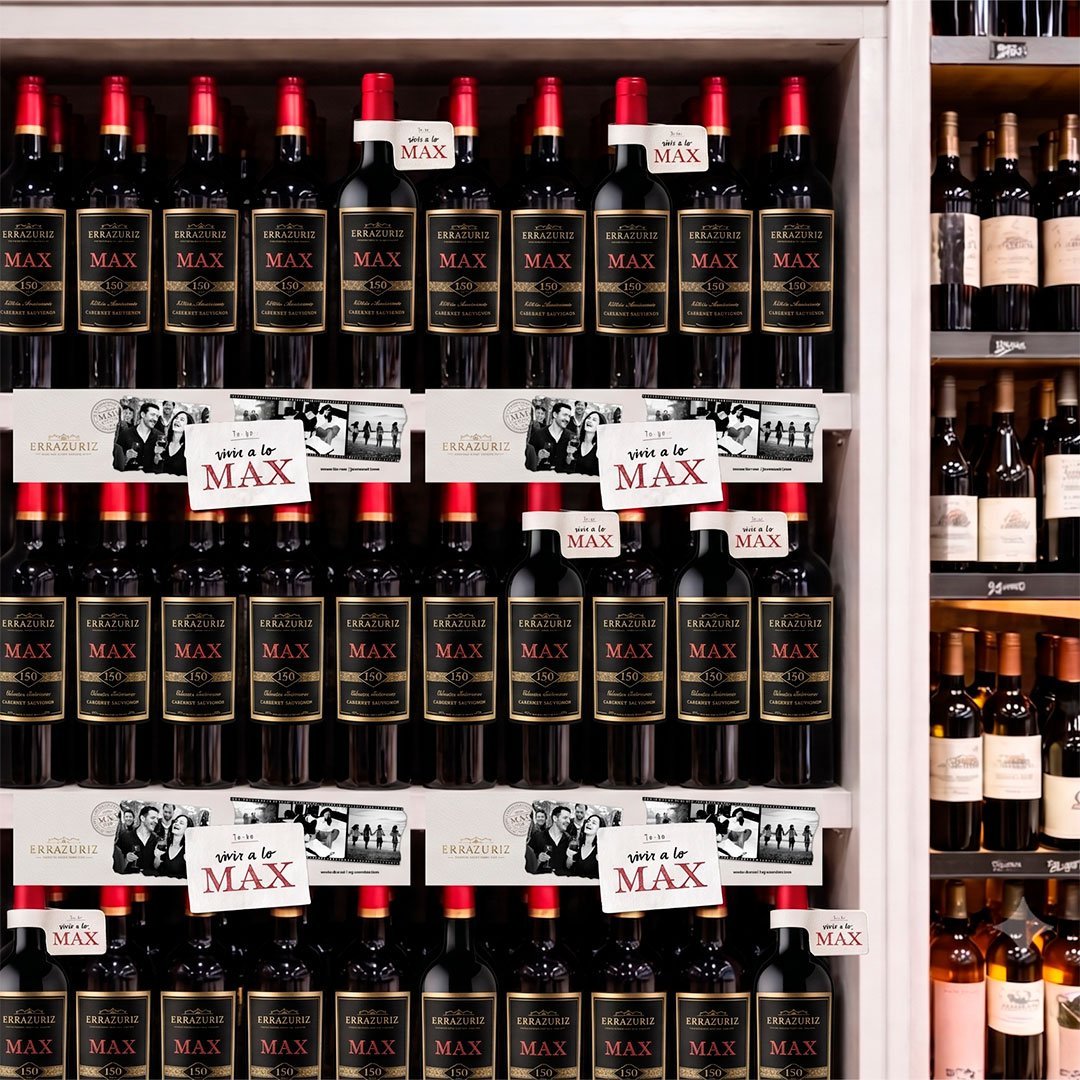
That is why, before naming, you have to research. The category, the competition, the market, the consumer, the visual and verbal codes, the opportunities for differentiation, the cultural tensions, the business objectives and also the legal limits. In wine, for example, where class 33 is utterly saturated, registering a name can be almost an extreme sport. And when the obvious paths are already taken, creativity stops being a luxury: it becomes a necessity.
Of course, there are the known rules. That the name be memorable. That it be easy to pronounce. That it preferably be short. That it sound good. That it not create negative associations. That it can coexist with a logo, a label, a domain, a campaign. There are even theories about letters, vowels and perceptions: stronger sounds, open vowels, names that feel more solid, lighter, more masculine, more feminine, more expansive.
All of that matters. But it is not enough.
The name is never alone
A name is not an isolated piece. A name is never alone. It is part of a positioning strategy that will then have to be sustained by design, communication, marketing, experience, commercial management and, above all, the real quality of the product or service.
“The name can open the door. But the brand has to walk in on its own.”
There are names born with great conceptual power, but if they are not then backed by a solid identity, coherent communication or a consistent brand experience, they end up weakened. And the opposite also happens: names that at first may seem simple or even strange gradually fill with meaning thanks to everything the brand builds around them.
Like naming a child
There is a comparison we like a lot. Choosing a name for a brand is a bit like choosing a child’s name.
When parents tell people what the child will be called, others may love it, find it odd or not think much of it. But the parents already imagine something. They already project a personality, an energy, a way of being. To everyone else it is still just a name. To them, on the other hand, there is already someone.
The same happens with brands. At the beginning, a name is fragile. It can sound strange because it has no life yet. But if it is well thought out, if it has direction and if those who choose it believe in it, it starts to grow. It starts to fill with meaning. Imagery dresses it. Communication gives it a voice. The product confirms it. Time makes it familiar. And one day, what was an abstract word starts to feel inevitable. A name is not born with all its meaning. It earns it as the brand shows who it is.

That is why it is so important that the people leading a brand are convinced by the name. It is not enough for the studio, the agency or the consultant to find it brilliant. The owners have to be able to say it. The sales team has to be able to defend it. Marketing has to be able to sustain it. Whoever is going to invest time, money and energy in turning it into a brand has to be able to feel it as their own.
If there is no internal ownership, the name is born weak.
Not all names do the same work
We also learned that not all names have to do the same job. Some need to sell fast, be direct, easy, almost immediate. Others have to build prestige over years. Some belong at the base of a product pyramid and need closeness. Others live at the top, where the consumer accepts more sophistication, more mystery, more layers.
Naming a volume wine is not the same as naming an icon wine. A dry-aged steakhouse is not the same as a software factory. An urban hotel with its own winery is not the same as a home department store. A premium real estate project is not the same as a biodynamic vermouth. Each case calls for a different kind of intelligence.
Names born from different problems
At Argency we have seen it many times.
Our own name was born from the union of Agency and Argentina, but also from a resonance with Argentum, silver, that which shines. Over time, that idea became part of our DNA: making brands shine, strengthening them, creating them, accompanying them through processes of transformation. Argency did not mean all of that from day one. It built it up with work, clients, projects and presence in different markets.
We have also created names such as Cultor, for a wine whose maker could not reveal who they were; Quimerino, the second vin of Quimera, which takes as its starting point the mythological creature with the head of a lion, the belly of a goat and the tail of a dragon to build a new symbol within Achaval Ferrer’s house of blends; and Tersus, from the Latin for “spotless,” conceived for wines that look after every detail.
We also developed names such as Calizo, Albar and Carmín, born from reading the soil and the different expressions of limestone; Masalto, for a high-altitude wine; Zonos, Block Austral and Block Boreal, within the wine universe; Astral, for a vermouth from a biodynamic winery, related to harvesting herbs according to the biodynamic astral calendar; and Contraviento, for a balsamic vinegar with character, territory and a powerful sound.
In dining, we created Abrasado, for a winery restaurant specializing in dry-aged meats, a name that condenses embers, asado, embrace, fire, hospitality and Argentine culture. Also Bosco, for a restaurant located in the park, and Gulerie, for a café and patisserie, born from the union of gluttony and pastry.
In hospitality, we created Hualta, for a Curio Collection by Hilton hotel, linked to altitude and to an urban experience with its own winery. In retail, HomeBox, for a department store of objects, furniture and solutions for the home. In real estate, names such as Civic, Torre Thays and Torres Cardinales, conceived for real estate projects with urban, architectural and territorial identity. And in technology, NonBugs, our software factory, with that almost exaggerated —and therefore memorable— promise of clean, tidy, error-free code.
They are different names because the problems were different. And that is perhaps one of the most important conclusions: there is no single formula for naming. There is a rigorous way of thinking.
When the obvious is no longer enough
In many categories it is no longer enough to repeat the same old devices. In wine, for example, there is an abundance of solemn surnames, Italian grandfathers, heroic family stories and names that try to sound important. But today’s consumer often perceives that solemnity as distant, repetitive or not very authentic.
“When everyone wants to sound historic, sometimes the most disruptive thing is to sound true.”
A good name can save time. It can help the consumer understand faster. It can organize the narrative. It can give direction to design. It can make a brand start several steps ahead. But it does not work magic on its own.
Method, intuition and sensitivity
There is method, yes. There is research, strategy, phonetics, legal analysis and brand architecture. But there is also intuition. There is subjectivity. There are hunches worth listening to. And there is the sensitivity to understand not only which name can work, but which name can be owned, sustained and built by the people who will carry that brand forward.
Because in the end, a name is not the end of a creative search.
It is the beginning of a strategic construction.

Naming a brand is not simply deciding what it will be called.
It is imagining what it can become.