It’s not the place, it’s the mindset: internal culture for innovating in adversity
Innovating at an international level from a corner with limited resources can seem like an impossible feat.
And yet, the key is not where we are, but how we think. A paradigm shift in our team’s internal culture can turn scarcity and adversity into fuel for creativity. In fact, history shows that adversity can be a catalyst for innovation: challenges act as an engine that pushes organizations and people to go beyond their limits and find original solutions. It is no coincidence that, over time, many crises have been a seedbed of creative ideas that would not have emerged in comfortable times.
The challenge, then, is to adopt a mindset on par with the most cutting-edge cities in the world, even if our immediate surroundings are adverse. If we manage to internally cultivate a “world-class” mentality —a positive, resilient team culture focused on possibilities— we will be able to generate innovations of international quality no matter the external obstacles. Below, we will explore how to build that winning mindset and internal culture.
Joy and intelligent positivity as a strategy
One of the keys is sustaining joy and optimism even in difficult environments. Keeping small daily stimuli that make us feel positive can make the difference in a team’s creativity. Positive emotions work as catalysts for creativity because they expand our mind, while negative emotions tend to contract it and limit our focus. In other words, a joyful and hopeful mood opens the way to more ideas and more flexible approaches to solving problems.
Of course, we are talking about sensible optimism, not delusional optimism. It is about cultivating an intelligent positivity, a kind of mental “zen” that lets us concentrate on solutions without denying reality. It is finding reasons to feel fulfilled with small everyday wins, and from there taking on bigger challenges with renewed energy.
“Let’s not allow our shortcomings to sabotage our state of creative growth.”
That sentence sums up the attitude: not letting limitations (of resources, of context) contaminate the team’s mentality. On the contrary, we use that strategic joy to enter creative “flow” and build innovative ideas. A team that feels motivated and confident in the middle of the storm will think more originally than one paralyzed by complaint or fear.
Isolating negativity and shielding the team's culture
As important as fostering the positive is protecting the internal culture from negative influences. In adverse environments, vicious circles of pessimism abound: catastrophist rumors, constant complaints, collective resignation. A leader must isolate those energies so they do not contaminate the team. This means establishing a kind of cultural “bubble”: clear rules, shared values and a common purpose that act as a shield against the hostile environment. When everyone on the team understands “the rules of this society” internally and works toward an achievable, motivating goal, a commitment is generated that makes it hard for external negativity to get in.
Creating a shielded culture also means providing psychological safety. The team has to feel comfortable proposing crazy ideas, taking risks and failing without fear. As experts point out, companies that value creativity and flexibility —and that foster an environment where employees feel safe taking risks— tend to be more successful in times of adversity. In other words, internal trust defeats ambient fear. If transparency, mutual support and the conviction that “we are in this together no matter what” reign inside our organization, it will be easier to stay focused on innovating even if it thunders outside.
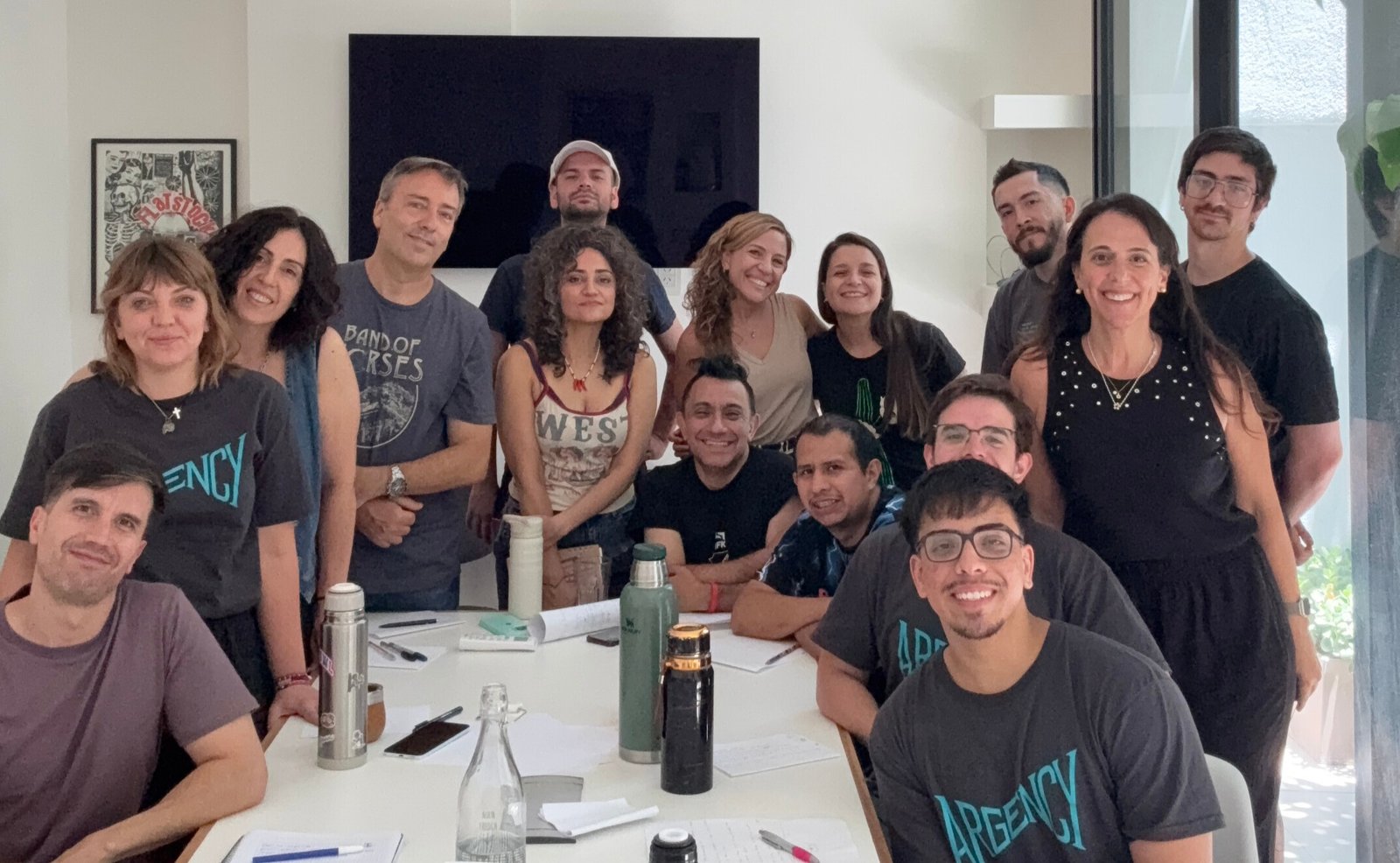
At Argency we have confirmed that the leader-team relationship must be healthy and “pure” to thrive under pressure. That means communicating honestly, avoiding blame and eliminating toxic internal politics. A team united by mutual trust will perform far more creatively than one where distrust or infighting prevails. Shielding the culture is, ultimately, creating an oasis where good ideas can be born and grow protected from the chaos outside.
Thinking big: why not here?
Another pillar of this winning mindset is feeling part of the world despite the distances. Adopting a global mentality, even from a remote location, expands our ambitions. Constantly asking ourselves “If they pull it off somewhere else in the world, why not here?” tears down mental barriers and encourages us to think big. It does not matter whether we are in Mendoza, in a small city or in a country with economic problems: the most capable and innovative minds have no postal code. We have to dare to believe that the same great works and innovations we see abroad can also take shape in our own environment.
In fact, having a global perspective tends to trigger creativity and innovation. People who think beyond borders tend to develop more novel ideas. By feeling like citizens of the world, connected to international trends and advances, we stop setting low ceilings for ourselves. We copy the best practices of the most cutting-edge hubs and adapt them to our local reality.
Of course, at first it can seem far-fetched. Many pioneering ideas initially “do not connect” with the local market and it is hard to find support. But with perseverance, that global vision ends up finding resonance. The waves we send out end up tuning in to the world’s “frequencies” and eventually the innovation makes its way. History is full of inventions and projects that seemed out of place in their context until they suddenly found their moment. That is why daring to imagine at “Silicon Valley level” from our own trench is key. “Why not here?” should be the daily mantra of the internal culture.
“If innovation is possible somewhere else in the world, why not here?”
When the team adopts this creed, it starts to see itself competing on equal terms with any global company. That ambitious self-image is powerful: it breaks the periphery complex and frees local talent to play in the “big leagues” of innovation.
Innovating from Mendoza: our “five minutes of success”
At Argency we have experienced first-hand what a daring mindset can achieve, even from Mendoza. Over the years we had several “five minutes of success” —flashes of creativity that showed the potential of thinking without limits—. Some real examples:
- The talking ballot (2013): At the height of augmented reality, we developed a revolutionary idea for political marketing. What if ballot papers came to life? We created a system so that, by scanning the ballot with a phone, the candidate would appear talking about their platform. This mix of physical paper with AR technology turned out to be so innovative that it opened unexpected doors for us: even the President of Argentina received us to learn about the project, which had coverage in media across the country. An idea conceived far from the capital managed to insert itself into the national conversation.
- Pioneers with beacons: We were among the first agencies in Latin America to adopt beacons (those small low-energy Bluetooth transmitters) for marketing experiences. We developed our own platform when this technology was just emerging. That early vision allowed us to offer indoor geolocation solutions and innovative in-store activations before they became widespread in the local market. We showed that from our “garage” it was possible to anticipate global technology trends.
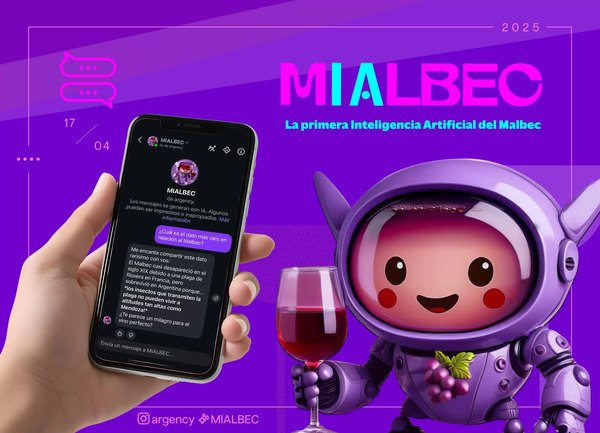
- MIALBEC: the first Malbec Artificial Intelligence: For April 17, World Malbec Day, we faced the same challenge as every year: telling something new about a varietal that has already said (almost) everything. So we decided to raise our glass with technology. That is how MIALBEC was born, an artificial intelligence trained exclusively to talk about Malbec: varieties, pairings, history, terroirs, wineries and anecdotes, with the data, tone and passion of a fan. A “digital sommelier” in your pocket, designed to amplify the experience and bring Malbec closer to new audiences without losing identity. A different —and very Mendozan— way of celebrating what is ours while looking ahead.
- The ice cream kilo revolution (2001): In the middle of the brutal Argentine crisis of 2001, we helped a chain of ice cream shops shift its pricing strategy. We broke the traditional scheme (where ¼ kg cost exactly a quarter of the kilo, and so on) and proposed another formula: selling the ½ kg and ¼ kg at proportionally higher prices than the kilo. That way we encouraged customers to take whole kilos (cheaper per unit) and, if they bought less, the company got a bigger margin. The result? The average ticket went up and the idea spread across the country. Today practically every ice cream shop in Argentina uses this pricing strategy. A solution born of adversity that transformed the industry.
These cases prove that powerful ideas can be generated from adverse contexts. With ingenuity and courage, we turned limitations (technological, geographical or economic) into unprecedented proposals that captured attention. Adversity forced us to think differently and that led to innovation.
From the fleeting spark to the sustained fire: the challenge of lasting
Now, a crucial lesson after years of experimenting with innovation is that generating creative “sparks” is not enough; you have to sustain the fire over time. At Argency, those brilliant ideas were sometimes so disruptive that they consumed all our energy in the effort to make them real and get them known. After the initial boom, we found ourselves with nothing left to keep pushing or developing them in the long run. The result: brilliant but fleeting initiatives that never got beyond being anecdotes or one-off cases.
This reflection leads us to focus on perseverance as part of the mindset. A truly innovative internal culture does not only celebrate the idea but prepares for what comes after: sustained execution, continuous improvement and evangelizing the new until it achieves lasting impact. Turning a good idea into real change requires persistence. It means continuing to iterate, adapt and push even when the initial excitement cools down. It requires allocating resources, time and faith so that seed of innovation grows into a robust tree and does not wither after the first flower.
In difficult environments, persevering is doubly challenging because negative distractions are always threatening to derail or discourage us. That is why the mindset we are talking about must include resilience and long-term focus. Not falling into the temptation of complaining when obstacles come up, but remembering the common purpose and keeping the flame lit. The internal culture must support this effort by rewarding consistency, learning from error and not giving up at the first failure. At the end of the day, sustained innovation distinguishes the organizations that transcend from those that only had a passing moment of glory.
Conclusion: a winning culture against all odds
Leading in an adverse environment is indeed possible when the right mentality is cultivated. A strong internal culture —founded on intelligent joy, protection against negativity, global vision and perseverance— can turn any crisis into a creative opportunity. We cannot always choose external conditions, but we can choose our mindset. And that choice changes everything: with the right mindset, weaknesses turn into opportunities, threats into innovative ideas.
Ultimately, innovation of international quality “starts at home”. It depends on how we nurture our team and what stories we tell ourselves behind closed doors. If we get our people to believe big, to feel safe to create and to know that even from adversity it is possible to shine, we will be taking the first step toward achieving great things from anywhere in the world.
Far from the noise. Close to the ideas.