
The day your customer stopped being human: what the AI-dominated internet will look like
The economic model that sustained the internet for decades is entering a crisis.
The rise of AI is redefining access to information and the distribution of value.
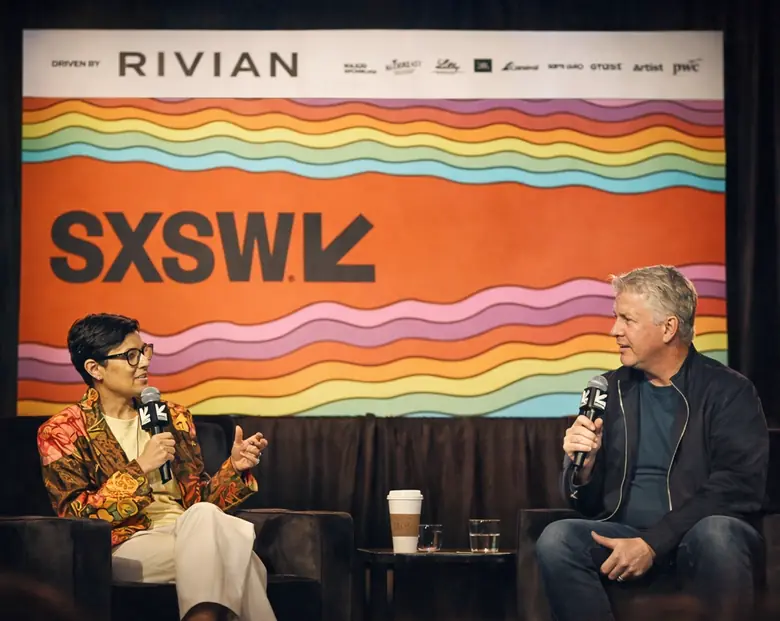
In this context, Matthew Prince, CEO and co-founder of Cloudflare —a company that handles close to 20% of global traffic—, brings a strategic view on the future of the web. The analysis focuses on the impact of AI agents on commerce, the control of access to information and the still-open debate about how content will be paid for in this new stage.
What if we told you that, in less than three years, your main customer on the internet will no longer be a human being, but a robot?
From Austin, Texas, where we are taking part in SXSW 2026 —one of the great global epicenters of innovation, technology and culture—, at Argency we are closely following the signals that are defining the present and the future of digital business. Our goal is clear: to understand before others where the world is moving in order to help our clients make better decisions. In a recent and revealing talk, Matthew Prince, founder and CEO of Cloudflare —the technological infrastructure through which roughly 20% of all global web traffic passes—, laid out the imminent tsunami that Generative Artificial Intelligence is causing in the digital ecosystem. Under the premise of “the internet after search” —or the transition toward an internet operated by AI agents—, Prince made it clear that the rules of the game that sustained the web for decades have expired. The traditional model of “create content, generate traffic and sell ads” is collapsing in the face of a new reality where bots do not click on advertising. We are facing a platform shift as monumental as the leap to smartphones or social media. And this is not theoretical: it has a direct impact on how you design, develop and structure digital products. That is where our software factory, Nonbugs, plays a key role: thinking and building platforms prepared not only for human users, but also to interact efficiently with artificial intelligence agents. So that your brand does not fall behind, at Argency we analyzed this talk and distilled the vision of one of the most influential leaders in web infrastructure. Below, we share the 10 most striking takeaways on how AI is going to rewrite the rules of business, content and corporate survival. Take note, because the future is already browsing your website.
1. By 2027 bots will outnumber humans on the internet
● Key figure: Historically, bot traffic accounted for around 20% of the internet (mainly Google crawlers, hackers or spammers). However, because of generative AI’s insatiable need for data, bot traffic is expected to overtake human traffic in 2027.
● Striking thought: While a human visits about 5 websites to buy a camera, an AI agent will visit 5,000 sites to do the same task. This massive traffic load is forcing a redesign of the entire technological infrastructure.
2. The traditional internet business model is broken
● Striking thought: For decades, the business model for browsers, social media and mobile was the same: “create attractive content, generate traffic and sell ads or subscriptions”. This model collapses in the age of AI, because bots and virtual agents do not click on ads, leaving content creators without their main source of monetization.
3. Big companies are “terrified” and divided over AI
● Key figure: Nobody knows exactly what the right strategy is, not even the retail giants. Walmart allows free access to bots so they can shop on its site. Amazon has the opposite strategy and is suing AI companies (such as Perplexity) to block them, because they are terrified that AI will steal their direct relationship with the customer. Target took a middle path, allowing only its own bots.
4. The serious danger for small local businesses
● Striking thought: Prince admits to being very worried that AI will destroy small businesses, which generate 70% of employment in the US..
● The explanation: A local business survives thanks to physical convenience (proximity) or emotional connection (you know the owner). An AI agent does not care about feelings or signage; it only looks for the best price and quality, so it could ignore the local business and go straight to the original supplier, “disintermediating” the corner store.
5. The value of filling the “holes in the Swiss cheese” (An opportunity for the media)
● Striking thought: For the first time in history, we have a mathematical model of human knowledge, but this model clearly reveals where information is missing (the “holes in the Swiss cheese”).
● Key figure: AI companies are desperate and willing to pay for human, original and local content that fills those gaps. For example, a small local newspaper can end up making more money licensing its hyperlocal data to AI companies than selling digital advertising.
6. The end of “clickbait” and the golden age of original content
● Key figure: Reddit makes roughly seven times more money licensing its data to AI than the New York Times, despite having a similar amount of text tokens.
● The explanation: Traditional journalism has spent decades recycling the same news story to generate outrage or cheap clicks. AI does not want that because it already has it repeated everywhere; what makes a platform valuable today is having 100% unique information that cannot be found anywhere else, such as the genuine opinions of Reddit users.
7. Users will blindly trust “their robot”, not the sources
● Striking thought: Just as in the cartoon The Jetsons, people will trust the answers of their AI assistant (their “Rosie the Robot”) without caring where it got the information from.
● Key figure: Getting organic traffic from Google today is 50 times harder than 18 months ago (because of AI summaries in search), and getting traffic from OpenAI is more than 50,000 times harder. People no longer click on footnotes or original links.
8. The “electric screwdriver” dilemma at work
● Advice: Prince gives direct advice to workers using an analogy. AI is like having invented the “electric screwdriver” in a world used to the manual screwdriver.
● Warning: There is a large group of mid-level employees who resist using these new AI tools because they were very good at their old manual processes. The advice is clear: “You must get on board”. Companies cannot afford to pay the same to someone who is 100 times less productive; adapting to these tools is no longer optional.
9. Going public (being a listed company) is the best antidote to complacency
● Advice for entrepreneurs: Contrary to the popular belief that criticizes Wall Street’s quarterly pressure, Prince emphatically recommends becoming a public company.
● Striking thought: Prince compares staying private to being unable to get divorced, where venture capital investors (VCs) and founders have “falsely happy” relationships because they cannot separate. “Public markets are incredible because when you do something stupid, they tell you: ‘Hey, that was stupid. I sold your shares'”. This honest feedback is invaluable.
10. Business purpose emerges by solving real problems
● Striking thought: Prince admits that when creating Cloudflare, they did not have a noble mission; the goal was “to seize a market opportunity and make money” so as not to have to inherit their father’s Hooters franchise.
● The turn: By creating a free service tier to test their technology, they attracted customers with enormous security problems and zero budget: humanitarian organizations and journalists hunted by death squads. They discovered their mission (“to help build a better internet”) not in a business plan, but by giving cybersecurity tools to the most vulnerable people in the world
The final verdict: adapt or be disintermediated
If Matthew Prince’s vision makes anything clear, it is that the transition toward an internet dominated by AI agents is not a passing fad or a dystopian warning; it is the new operating standard. Complacency is no longer an option. As the analogy from the talk rightly points out, clinging to traditional processes today is like insisting on using a manual screwdriver when your competition has already mastered the “electric screwdriver”. The good news is that this revolution also brings with it the golden age of original content and real value. Mediocrity, clickbait and recycled content have their days numbered because AI does not need them. Today, your brand’s greatest competitive advantage will be its ability to offer unique, authentic, quality information that fills those “holes in the Swiss cheese” of digital knowledge. The brands that will succeed are those that manage to build trust signals so solid that AI agents have no choice but to recommend them.
At Argency and Nonbugs, we know that navigating this new paradigm can feel overwhelming. However, understanding how to structure your digital presence so that it is appealing both to humans and to their “virtual assistants” is exactly the kind of challenge we love to solve.
Is your company ready for the internet that is coming? Do not let a bot decide your future. Get in touch and let’s design together the strategy that will secure your brand’s relevance in the new era of Artificial Intelligence.
What if we told you that, in less than three years, your main customer on the internet will no longer be a human being, but a robot?
From Austin, Texas, where we are taking part in SXSW 2026 —one of the great global epicenters of innovation, technology and culture—, at Argency we are closely following the signals that are defining the present and the future of digital business. Our goal is clear: to understand before others where the world is moving in order to help our clients make better decisions. In a recent and revealing talk, Matthew Prince, founder and CEO of Cloudflare —the technological infrastructure through which roughly 20% of all global web traffic passes—, laid out the imminent tsunami that Generative Artificial Intelligence is causing in the digital ecosystem. Under the premise of “the internet after search” —or the transition toward an internet operated by AI agents—, Prince made it clear that the rules of the game that sustained the web for decades have expired. The traditional model of “create content, generate traffic and sell ads” is collapsing in the face of a new reality where bots do not click on advertising. We are facing a platform shift as monumental as the leap to smartphones or social media. And this is not theoretical: it has a direct impact on how you design, develop and structure digital products. That is where our software factory, Nonbugs, plays a key role: thinking and building platforms prepared not only for human users, but also to interact efficiently with artificial intelligence agents. So that your brand does not fall behind, at Argency we analyzed this talk and distilled the vision of one of the most influential leaders in web infrastructure. Below, we share the 10 most striking takeaways on how AI is going to rewrite the rules of business, content and corporate survival. Take note, because the future is already browsing your website.

1. By 2027 bots will outnumber humans on the internet
● Key figure: Historically, bot traffic accounted for around 20% of the internet (mainly Google crawlers, hackers or spammers). However, because of generative AI’s insatiable need for data, bot traffic is expected to overtake human traffic in 2027.
● Striking thought: While a human visits about 5 websites to buy a camera, an AI agent will visit 5,000 sites to do the same task. This massive traffic load is forcing a redesign of the entire technological infrastructure.
2. The traditional internet business model is broken
● Striking thought: For decades, the business model for browsers, social media and mobile was the same: “create attractive content, generate traffic and sell ads or subscriptions”. This model collapses in the age of AI, because bots and virtual agents do not click on ads, leaving content creators without their main source of monetization.
3. Big companies are “terrified” and divided over AI
● Key figure: Nobody knows exactly what the right strategy is, not even the retail giants. Walmart allows free access to bots so they can shop on its site. Amazon has the opposite strategy and is suing AI companies (such as Perplexity) to block them, because they are terrified that AI will steal their direct relationship with the customer. Target took a middle path, allowing only its own bots.
4. The serious danger for small local businesses
● Striking thought: Prince admits to being very worried that AI will destroy small businesses, which generate 70% of employment in the US..
● The explanation: A local business survives thanks to physical convenience (proximity) or emotional connection (you know the owner). An AI agent does not care about feelings or signage; it only looks for the best price and quality, so it could ignore the local business and go straight to the original supplier, “disintermediating” the corner store.
5. The value of filling the “holes in the Swiss cheese” (An opportunity for the media)
● Striking thought: For the first time in history, we have a mathematical model of human knowledge, but this model clearly reveals where information is missing (the “holes in the Swiss cheese”).
● Key figure: AI companies are desperate and willing to pay for human, original and local content that fills those gaps. For example, a small local newspaper can end up making more money licensing its hyperlocal data to AI companies than selling digital advertising.
6. The end of “clickbait” and the golden age of original content
● Key figure: Reddit makes roughly seven times more money licensing its data to AI than the New York Times, despite having a similar amount of text tokens.
● The explanation: Traditional journalism has spent decades recycling the same news story to generate outrage or cheap clicks. AI does not want that because it already has it repeated everywhere; what makes a platform valuable today is having 100% unique information that cannot be found anywhere else, such as the genuine opinions of Reddit users.
7. Users will blindly trust “their robot”, not the sources
● Striking thought: Just as in the cartoon The Jetsons, people will trust the answers of their AI assistant (their “Rosie the Robot”) without caring where it got the information from.
● Key figure: Getting organic traffic from Google today is 50 times harder than 18 months ago (because of AI summaries in search), and getting traffic from OpenAI is more than 50,000 times harder. People no longer click on footnotes or original links.
8. The “electric screwdriver” dilemma at work
● Advice: Prince gives direct advice to workers using an analogy. AI is like having invented the “electric screwdriver” in a world used to the manual screwdriver.
● Warning: There is a large group of mid-level employees who resist using these new AI tools because they were very good at their old manual processes. The advice is clear: “You must get on board”. Companies cannot afford to pay the same to someone who is 100 times less productive; adapting to these tools is no longer optional.
9. Going public (being a listed company) is the best antidote to complacency
● Advice for entrepreneurs: Contrary to the popular belief that criticizes Wall Street’s quarterly pressure, Prince emphatically recommends becoming a public company.
● Striking thought: Prince compares staying private to being unable to get divorced, where venture capital investors (VCs) and founders have “falsely happy” relationships because they cannot separate. “Public markets are incredible because when you do something stupid, they tell you: ‘Hey, that was stupid. I sold your shares'”. This honest feedback is invaluable.
10. Business purpose emerges by solving real problems
● Striking thought: Prince admits that when creating Cloudflare, they did not have a noble mission; the goal was “to seize a market opportunity and make money” so as not to have to inherit their father’s Hooters franchise.
● The turn: By creating a free service tier to test their technology, they attracted customers with enormous security problems and zero budget: humanitarian organizations and journalists hunted by death squads. They discovered their mission (“to help build a better internet”) not in a business plan, but by giving cybersecurity tools to the most vulnerable people in the world
The final verdict: adapt or be disintermediated
If Matthew Prince’s vision makes anything clear, it is that the transition toward an internet dominated by AI agents is not a passing fad or a dystopian warning; it is the new operating standard. Complacency is no longer an option. As the analogy from the talk rightly points out, clinging to traditional processes today is like insisting on using a manual screwdriver when your competition has already mastered the “electric screwdriver”. The good news is that this revolution also brings with it the golden age of original content and real value. Mediocrity, clickbait and recycled content have their days numbered because AI does not need them. Today, your brand’s greatest competitive advantage will be its ability to offer unique, authentic, quality information that fills those “holes in the Swiss cheese” of digital knowledge. The brands that will succeed are those that manage to build trust signals so solid that AI agents have no choice but to recommend them.
At Argency and Nonbugs, we know that navigating this new paradigm can feel overwhelming. However, understanding how to structure your digital presence so that it is appealing both to humans and to their “virtual assistants” is exactly the kind of challenge we love to solve.
Is your company ready for the internet that is coming? Do not let a bot decide your future. Get in touch and let’s design together the strategy that will secure your brand’s relevance in the new era of Artificial Intelligence.